
Comanche County Sex Offender Checks
The Texas Department of Public Safety manages the Texas Public Sex Offender Registry under Code of Criminal Procedure Chapter 62. It is the primary public source for Comanche County registry information. The registry supports name, area, and higher-education institution searches, along with downloads. Name search helps when the person is known. Area search serves community awareness near an address. The higher-education mode addresses campus registration. Exact live radii and dropdown values were not reliably available during research, so no unverified distance option should be assumed.
A registry entry describes the public part of a legal registration duty. It is not a full criminal-history report, a Comanche County Jail roster, or a clerk's case file, and it does not list every case in a person's past. The displayed reportable offense and conviction date identify the basis for registration. Current compliance or registration text must be read as of its update. Neither registry presence nor a status label proves new misconduct. If a separate case or current arrest matters, verify that event with the County or District Clerk, the jail, or the agency that created it.
Comanche County Registration Authorities
Local registration responsibility depends on where the residence lies. Within a municipality, Chapter 62 routes registration to the municipal police chief's local authority. Outside a municipality, the Comanche County Sheriff is the local authority. Rural residents use the Sheriff at 300 Industrial Boulevard, Comanche, 325-356-7533. Appointment practices and hours are not published, so confirm them before going to the office.
City limits matter more than the postal place name. An address inside Comanche or De Leon follows the applicable municipal route. The Gustine public-safety page identifies the Sheriff as local law enforcement, so an unincorporated or Gustine-area address follows that route when there is no municipal police authority. Because mailing addresses and city boundaries do not always align, ask the local authority to resolve a close boundary question. Do not infer registration responsibility from a ZIP code alone.
The official De Leon municipal court search illustrates a separate city record channel that must not be confused with the DPS registry.
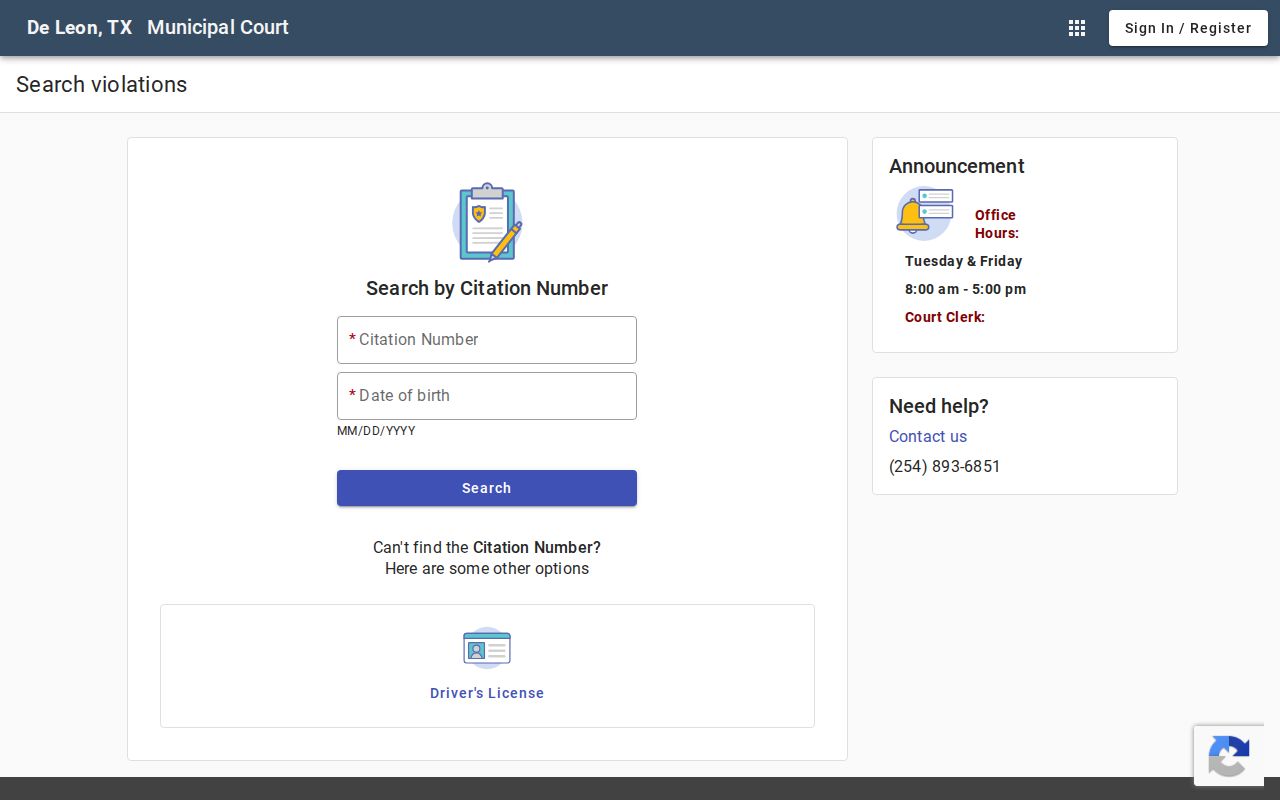
A city citation screen cannot confirm a Chapter 62 profile, registration location, or compliance status.
Texas Public Sex Offender Registry Searches
Use the Texas Public Sex Offender Registry as the first official search. Start with the mode that fits the question and keep enough facts to distinguish similar names. The live interface can time out, so save the search terms and retry later instead of substituting an unofficial listing.
- Open the DPS registry and review its terms. Choose name, area, higher-education, or an available download based on the safety question.
- Enter only the fields shown by the live official interface. Do not invent a radius or assume that a postal city equals the registering jurisdiction.
- Compare the public identifiers, address or geographic description, registering authority, reportable offense, risk, and registration status before treating a result as a match.
- If DPS is unavailable, retry and use NSOPW for a cross-jurisdiction check. Report a compliance concern to the municipal authority or Comanche County Sheriff.
The available search mode determines which fields appear, so use the live labels and the purpose described below.
| Search Mode | Input | Required | Use |
|---|---|---|---|
| Name | Person name and live fields | Follow current screen | Locate a known person, then compare profile identifiers |
| Area | Address or area fields shown live | Follow current screen | Support neighborhood awareness without assuming an unverified radius |
| Higher education | Institution search | Follow current screen | Find public campus-related registration information |
| Downloads | Available DPS data selection | Varies | Use official bulk options under the posted conditions |
The official DPS registration program page explains the state program behind the public search.
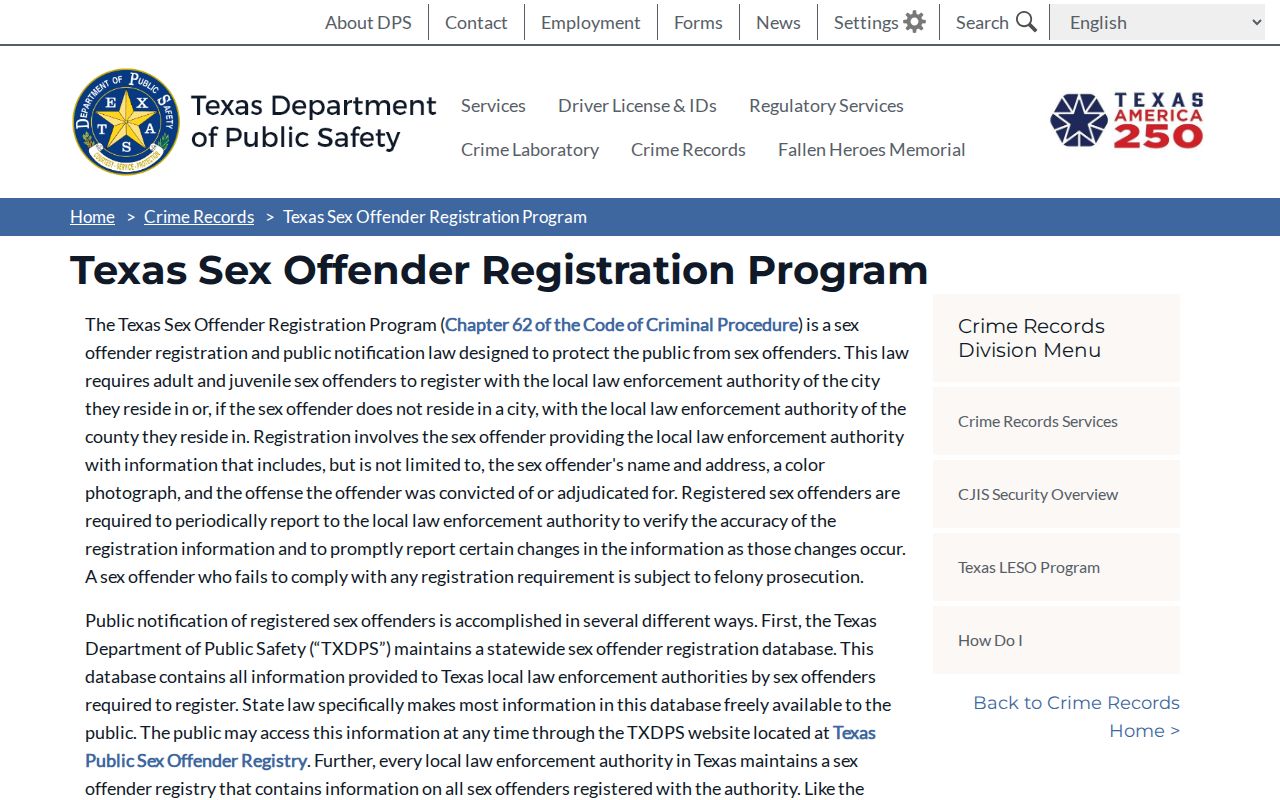
The program source gives the legal and agency context that a result list alone cannot provide.
Note: Use the live DPS controls as published because exact area radii and dropdown options were not verified.
Comanche County Registry and NSOPW
The DPS registry is the main source for a Comanche County address or Texas registration profile. The Dru Sjodin National Sex Offender Public Website, or NSOPW, adds a cross-state layer by searching participating jurisdictions. That can help when a person recently lived elsewhere or when a search should not stop at the Texas border. NSOPW aggregates public jurisdiction data; it does not replace the Texas source or the local authority responsible for a current Comanche County concern.
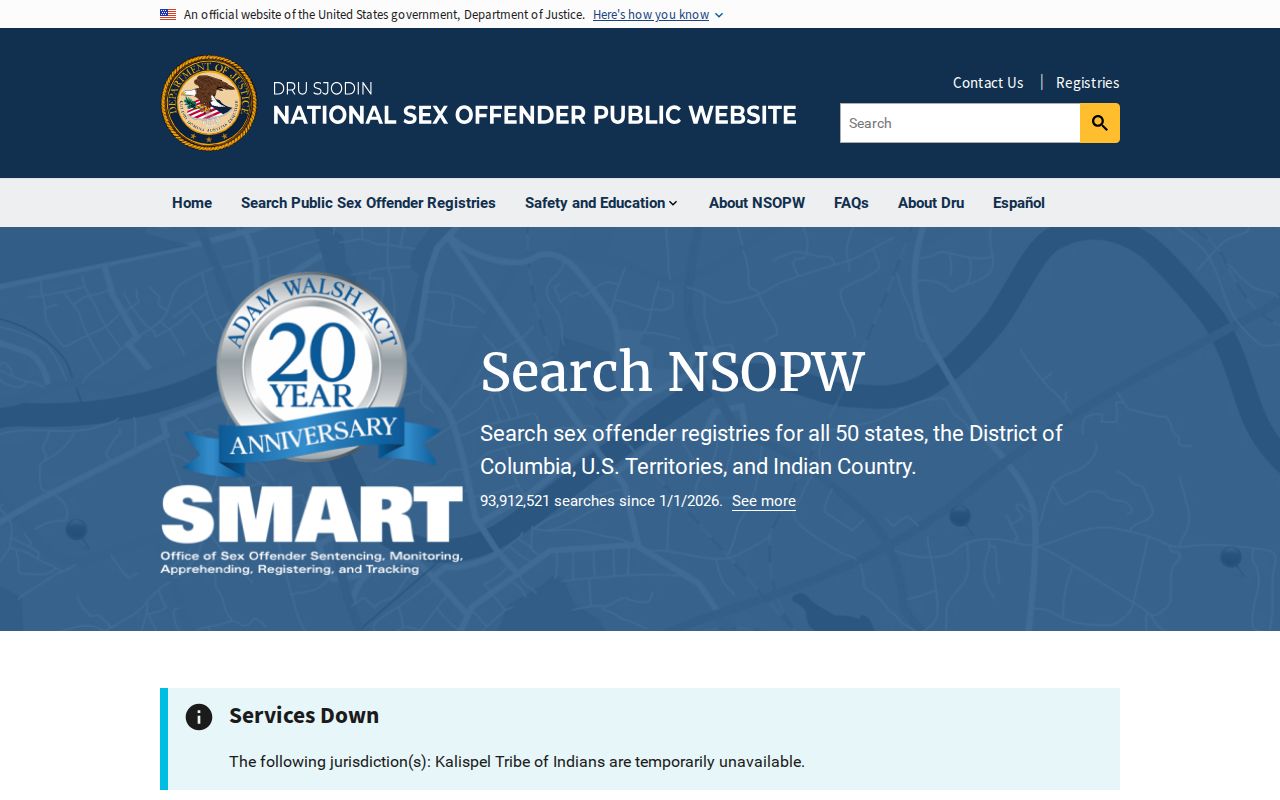
The national screen broadens the search, while DPS remains the source for the Texas profile and Chapter 62 fields.
If the DPS interface times out, retry later, use NSOPW for the participating-jurisdiction check, and contact the right registering authority about suspected noncompliance. A local office is not a rumor-check service. Give a precise address, public profile reference, or observed compliance concern, and let the authority assess it.
Registry Profiles: What They Show
A Texas public profile carries enough data to help identify a registered person and understand the reportable duty. Some fields apply only in set cases. Vehicle information, for example, is tied by statute to qualifying human-trafficking registration circumstances and should not be expected on every profile. An address may appear as a residence or a detailed geographic description.
| Identity | Name, aliases, date of birth, sex, race, and recent color photograph. |
|---|---|
| Description | Height, weight, eye color, and hair color help distinguish similar names. |
| Location | Residence or a geographic description, plus the registering authority. |
| Registration basis | Reportable offense, conviction date, punishment, and victim-age category. |
| Status | Risk and compliance or registration information, read as of the profile update. |
| Other public fields | Supervision status, certain license and higher-education indicators, and qualifying vehicle details. |
The official registry search interface is designed around these public identification and notification records.
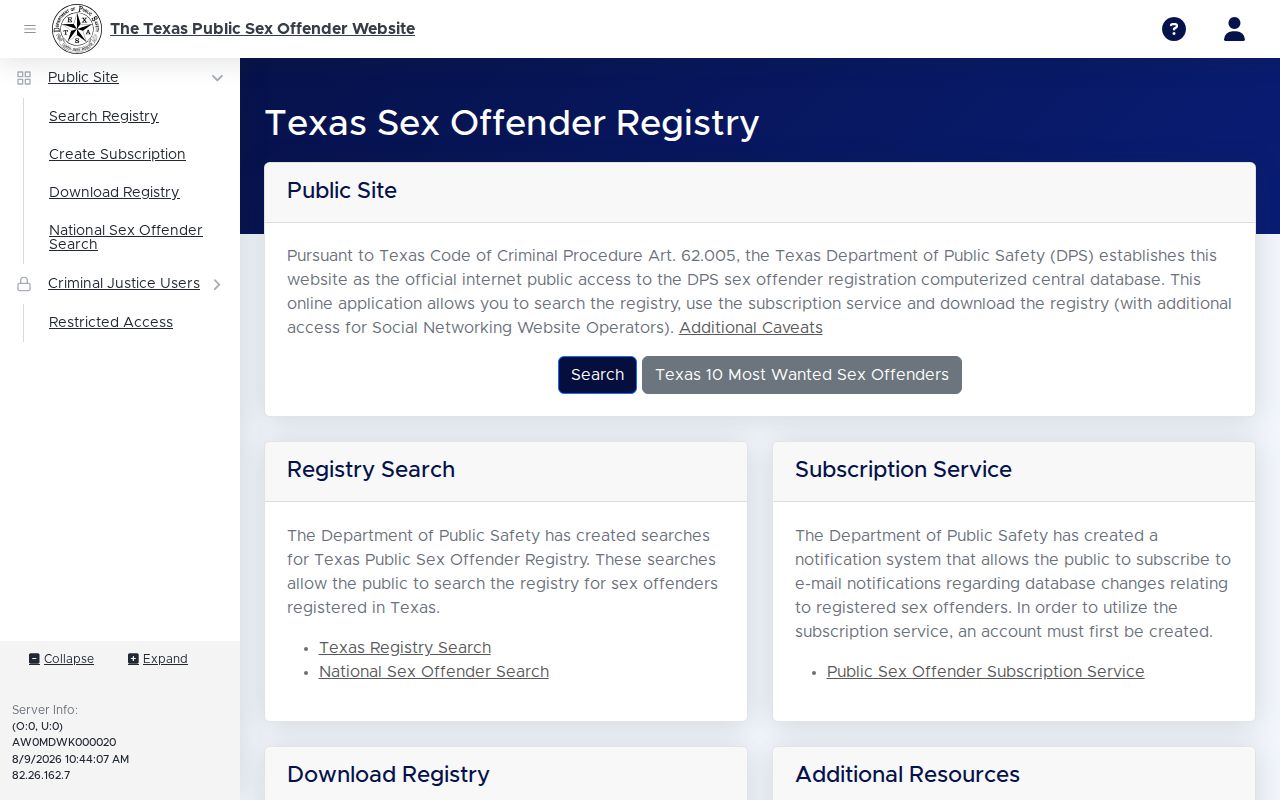
Open the full profile and read its labels rather than drawing a conclusion from a name in a results list.
Private Comanche County Registry Fields
Chapter 62 makes listed registry facts public but withholds other data by design. A public profile does not disclose the Social Security number, driver's license number, home or work phone, cell phone, online identifiers, employer name or contact information, other DPS-required fields, or the victim's identity. Juvenile registration can also be nonpublic by court order.
An absent phone, online account, employer address, or victim name is a legal privacy boundary, not proof that the search page failed to load. Keep a Comanche County registry review focused on public identification, address awareness, offense basis, risk, and registration status. Do not try to fill protected gaps through unofficial people-search or aggregation services. Official fields are the proper basis for community awareness and for a clear report to law enforcement.
Registration Levels and Duties in Texas
Texas risk levels and registration duration answer different questions. Level 1 means a low assessed danger and low likelihood of reoffending. Level 2 is moderate. Level 3 signals serious danger and an assessment that the person will continue. Civil Commitment is a separate sexually violent predator designation with intensive treatment and supervision. None of those labels is a federal SORNA Tier I, II, or III duration code.
| Category | Meaning or Duration | Verification |
|---|---|---|
| Level 1 low | Low risk label; the label alone does not set duration | Annual unless another statutory category applies |
| Level 2 moderate | Moderate risk label; duration comes from the duty | Annual unless another statutory category applies |
| Level 3 high | Serious risk label; duration still follows Article 62.101 | Annual unless another statutory category applies |
| Civil Commitment | Separate civil supervision designation | Every 30 days |
| Two or more sexually violent offenses | Duration follows the applicable statutory duty | Every 90 days |
| Enumerated adult duty | Lifetime under Article 62.101 | Applicable statutory schedule |
| Other adult duty | Through the tenth anniversary of the latest qualifying discharge or release point | Annual |
| Juvenile adjudication | Through the tenth anniversary of disposition or completion, whichever is later, subject to orders | Applicable statutory schedule |
| Outside jurisdiction | Until the foreign, federal, or UCMJ duty expires | Applicable statutory schedule |
Duration must be read from the governing duty and offense category, not guessed from risk. The official offense list in Code of Criminal Procedure Chapter 62 controls.
Comanche County Registry Check-In Schedules
Initial registration generally occurs by the later of the seventh day after arrival or the first date permitted by the local authority's policy. A planned Texas address change is reported in person no later than seven days before moving, followed by reporting to the new authority within seven days after arrival. Name, online identifier, health, work, and education changes also have seven-day reporting rules.
Verification frequency varies. A civilly committed person verifies every 30 days. A person with two or more sexually violent offenses verifies every 90 days. Others generally verify annually. These check-ins occur with the responsible local authority, which is why the municipal boundary rule matters in Comanche County. Report suspected noncompliance to that authority. Failure to comply is a felony, but only an official investigation and case can establish a violation.
Note: Confirm the local appointment process before visiting because Comanche County sources publish no registry counter hours.
Comanche County Registry Notification Zones
Texas uses a specific postcard rule for a Level 3 or civil-commitment move. DPS sends English and Spanish notices to residences and businesses within one mile in an unsubdivided area or three blocks in a subdivided area. A local authority may also use meetings, postings, circulars, or a specialized site. This does not mean every change produces the same notice for every person.
Chapter 62 also does not create one blanket statewide residence-distance limit for every registrant. A municipal child-safety ordinance must be checked on its own current terms before making a distance claim. Separate the statutory postcard zone from any local residence rule. They serve different purposes. For a Comanche County address near a city limit, confirm both the local authority and any current ordinance with that jurisdiction.
Using Registry Information Lawfully
Registry records support personal, family, campus, neighborhood, and community awareness. They can help people plan safe routines and send a sound compliance concern to the proper authority. They do not authorize confrontation or a public accusation. A profile's registration basis is not proof of a new offense, and a status should be read only as the official source presents it.
Misuse warning: Texas Code of Criminal Procedure Chapter 62 governs public registry information. Using it to threaten, harass, intimidate, or pursue vigilante action can be a crime and should never replace a report to law enforcement.
Send suspected noncompliance inside a municipality to the appropriate municipal registration authority. For an unincorporated or Gustine-area address without municipal police authority, contact the Comanche County Sheriff at 325-356-7533. Provide facts from the public record or direct observation and let trained officials decide whether follow-up is required.